
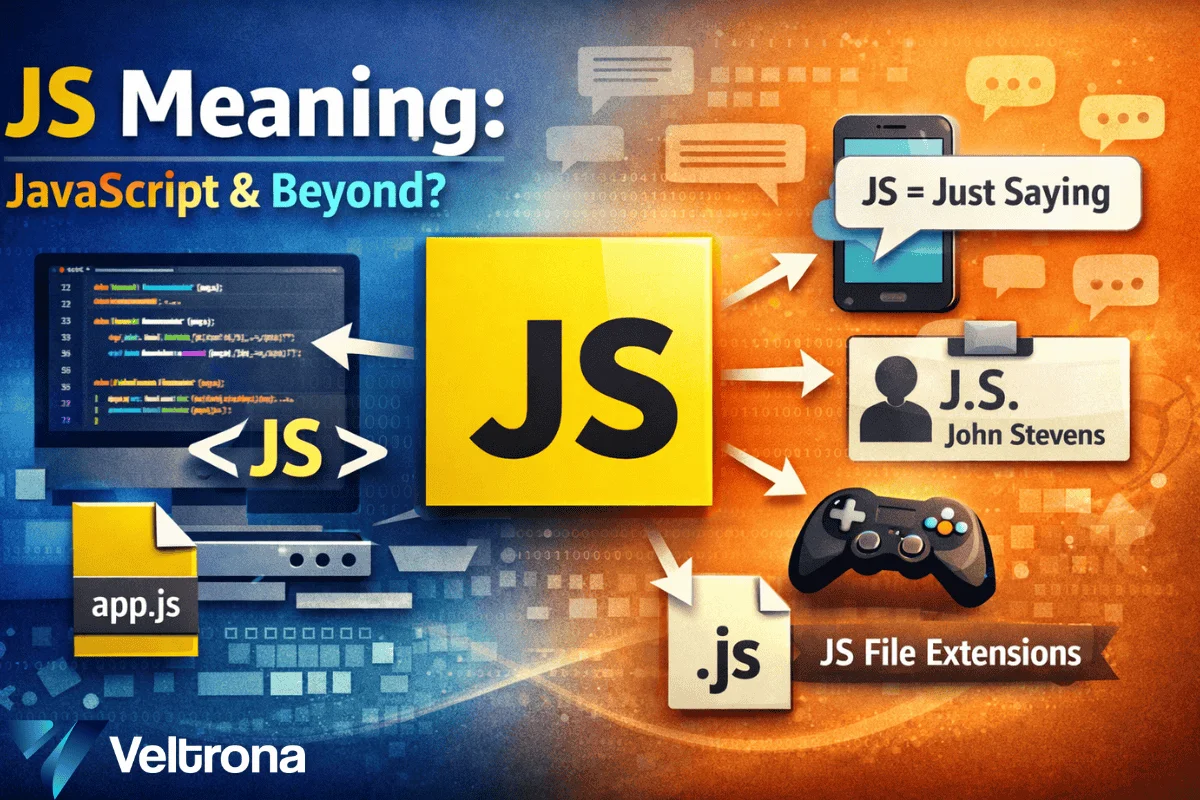

You have probably seen the abbreviation JS pop up in a tutorial, a chat message, or a file name and wondered exactly what it stands for. The short answer is that it depends on where you see it. While most people associate the JS meaning with JavaScript, it appears in other contexts across the internet.
For developers and beginners learning to code, knowing what JS means in a technical context is essential. For everyday internet users, understanding abbreviations like JS helps them follow conversations more clearly without getting lost. This article covers the most common meanings of JS, explains why JavaScript dominates the conversation, and shows you how context makes all the difference.
What Does JS Mean?
Abbreviations have become a common feature of online communication. They save time, reduce effort, and make written conversations feel faster and more fluid. Short terms like JS can mean different things depending on the platform, the topic, and the people using them.
JS is widely recognized in technology, but it also appears in casual conversations, file names, and even as someone’s initials. The meaning shifts with context, so reading the context around the abbreviation is key to understanding it correctly.
JS Meaning in Programming
In the world of programming and web development, JS stands for JavaScript. This is by far the most common meaning you will encounter online, especially if you spend any time around developers or coding resources.
JavaScript is a scripting language used to create interactive websites. It handles features such as dropdown menus, form validation, animations, and real-time content updates. Alongside HTML and CSS, it forms the foundation of modern web development.
Developers use the abbreviation JS constantly. You will see it in file names like app.js, in documentation, in coding tutorials, and across developer communities. According to the IANA media type registration, the official file extensions for JavaScript are .js and .mjs, with the latter specifically identifying JavaScript module files.
Because the language is so widely used, the shorthand JS has become second nature to developers.
Other Possible JS Meanings
Not every instance of JS refers to JavaScript. Here are some other ways the abbreviation appears online.
JS in Social Media
On social media and in text messaging, JS can stand for “just saying.” Someone might write “that was a bad decision, JS” to share a casual opinion without being confrontational. The tone is typically light and easygoing.
JS as Initials
JS can simply be the initials of a person’s name. In conversations, on social profiles, or in professional contexts, JS might refer to someone named James Smith, Jennifer Scott, or any other name with those initials.
JS in File Extensions
As mentioned earlier, .js files are directly associated with JavaScript. If you come across a .js file on a website, in a GitHub repository, or in a software project, it contains JavaScript code.
JS in Gaming or Internet Slang
Some communities and gaming groups may use JS in their own specific ways. Slang evolves quickly in online spaces, and the meaning can shift depending on the group using it. Always consider the audience and the platform when you encounter an unfamiliar use of JS.
Why JS Usually Refers to JavaScript
When people search for the JS meaning, the vast majority of results point to JavaScript. There are clear reasons for this.
- JavaScript is one of the most widely used programming languages in the world, giving it massive visibility across the internet.
- Developers frequently use JS as a shorthand in documentation, tutorials, and technical discussions.
- The abbreviation is short, easy to type, and immediately recognisable to anyone with a background in web development.
- Front-end development resources regularly reference JS, keeping it prominent across learning platforms and coding communities.
- The .js file extension has further solidified the connection between the abbreviation and the language itself.
The sheer volume of JavaScript content online means that when most people write or say JS, they mean the programming language.
How Context Helps You Understand JS Meaning
Context is the most reliable tool you have when interpreting abbreviations. A single two-letter term can carry very different meanings depending on where it appears.
If you see JS in a coding tutorial or a developer forum, it almost certainly refers to JavaScript. If you see it in a casual text conversation, it might mean “just saying.” If it appears next to a person’s name, it is likely their initials.
Ask yourself these questions when you are unsure:
Is the conversation technical or casual? Technical discussions around websites, coding, or software development almost always use JS to mean JavaScript. Casual social media posts might use it as slang.
What is the surrounding topic? If someone is talking about building a web page or writing code, JS refers to the programming language. If someone is sharing an opinion in a chat, the slang interpretation is more likely.
Are there any file names or code snippets nearby? If you see .js attached to a file name, that confirms you are dealing with JavaScript.
Common Places Where You Will See JS
The JS abbreviation turns up across a wide range of platforms and content types. Here are the most common ones:
- Web development tutorials and beginner coding guides
- Programming documentation on platforms like MDN Web Docs
- Online forums and communities, like Stack Overflow and GitHub
- Social media posts and casual messaging conversations
- Coding file names and software project repositories
Recognizing these environments helps you quickly determine which meaning applies.

Why Understanding JS Meaning Is Important
Knowing what JS means in different contexts has practical benefits, especially if you are exploring programming or spending time in online communities.
- It helps you avoid confusion when reading technical articles or watching coding tutorials for the first time.
- Understanding JS as JavaScript gives you a stronger foundation when learning web development terminology.
- Recognizing the slang use of JS in social media conversations helps you follow informal discussions more easily.
- Clear knowledge of abbreviations makes you a more confident communicator in both technical and casual settings.
JS Means What the Context Says It Does
The JS meaning most commonly points to JavaScript, and for good reason. It is one of the most dominant programming languages on the web, and its abbreviation is deeply embedded in development culture. The IANA officially recognizes .js as the file extension for JavaScript, further cementing that connection.
That said, abbreviations are inherently flexible. JS can mean “just saying” in a text message, represent someone’s initials in a professional setting, or carry a unique meaning within a specific community.
The takeaway is simple. When you see JS, look at the context around it. A coding tutorial and a casual tweet are two very different environments, and the meaning of JS changes accordingly. Once you develop that habit of reading context, interpreting abbreviations like JS becomes quick and effortless.