
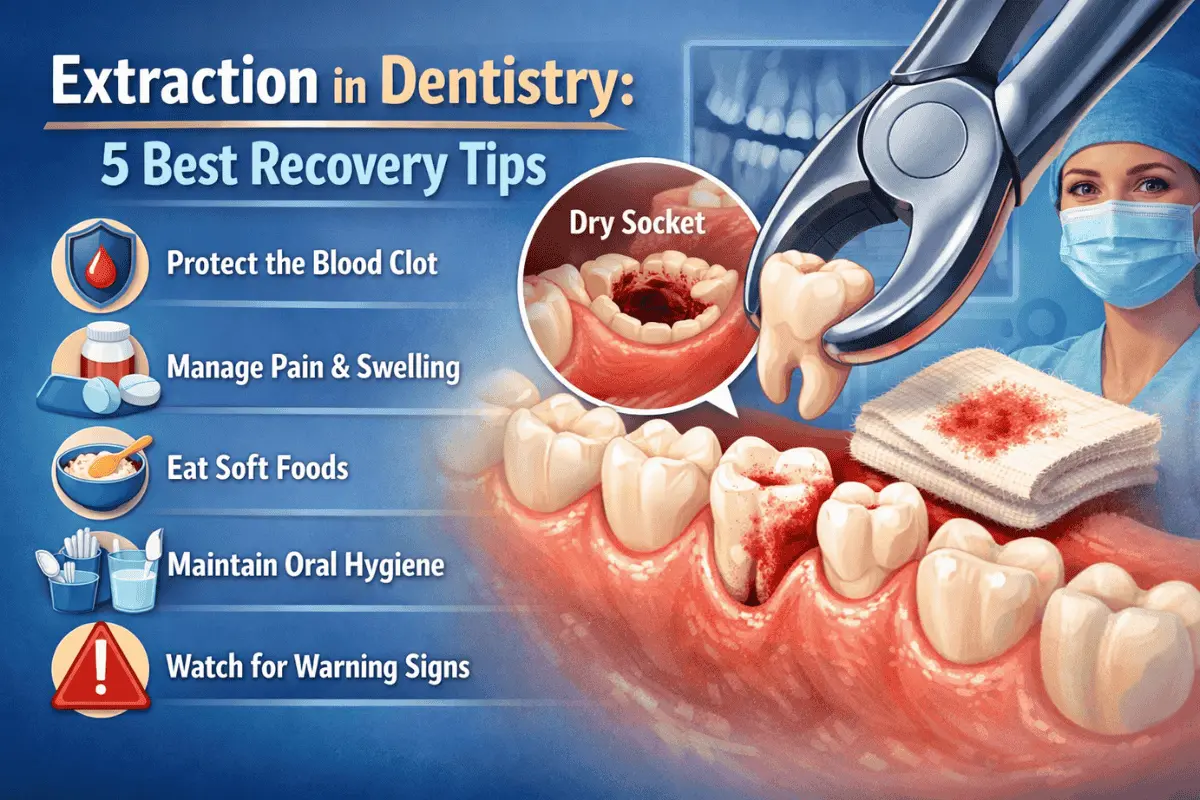

Getting a tooth pulled can feel daunting. But extraction in dentistry is one of the most common procedures performed every day, and for good reason. Whether it’s a badly decayed molar, an impacted wisdom tooth, or a tooth that’s been damaged beyond saving, sometimes removal is the most practical path forward.
Dentists recommend tooth extraction for a range of situations: severe infection, advanced gum disease, overcrowding before orthodontic treatment, or teeth so damaged that no filling or crown can restore them. The procedure itself is usually quick. What happens next, however, matters just as much.
Proper aftercare is what separates a smooth recovery from a painful one. Follow the right steps, and you’ll heal faster, reduce the risk of complications, and get back to normal within days. This article walks through five practical recovery tips based on trusted dental guidance.
Understanding Extraction in Dentistry
What Is Tooth Extraction?
A tooth extraction is the removal of a tooth from its socket in the jawbone. There are two main types.
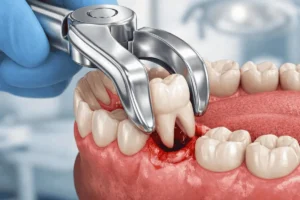
A simple extraction is performed on a tooth that is visible in the mouth. The dentist uses forceps to remove it after using an elevator to loosen it. A surgical extraction is more involved and is used for teeth that haven’t fully erupted (like wisdom teeth) or have broken off at the gum line.
Why Dentists Recommend It
Extraction in dentistry is typically a last resort. Whenever feasible, dentists want to preserve natural teeth. But some situations leave no better option:
- Impacted teeth that are trapped beneath the gum and causing pain or crowding
- Severe decay or infection that has spread to the root
- Orthodontic treatment that requires extra space in the jaw
- Advanced gum disease that has weakened the supporting bone
What Happens After the Procedure
Once the tooth is out, a blood clot forms in the empty socket. This clot is the foundation of healing. You’ll likely notice some swelling and mild discomfort in the first day or two. That’s normal, and it usually peaks around 48 hours before gradually improving.
Tip 1: Protect the Blood Clot
The blood clot that forms after extraction is not just a side effect. It’s a protective barrier covering exposed bone and nerve tissue. If it gets dislodged before healing begins, a painful condition called dry socket can develop.
Dry socket affects roughly 2% to 5% of all tooth extractions, but the risk jumps significantly for smokers. According to research cited by the Cleveland Clinic, people who smoke are more than three times as likely to develop dry socket compared to non-smokers.
To keep the clot in place:
- Do not rinse your mouth on the day of the extraction
- Avoid drinking through straws for at least a week. The suction can pull the clot right out of the socket
- Do not smoke for as long as possible after the procedure
- Bite gently on gauze for the first hour to control bleeding and support clot formation
Expert insight: Most post-extraction complications don’t happen because of the procedure itself. They happen in the hours that follow, when patients return to their normal habits too quickly. Treating the first 24 hours with care makes a real difference.
Tip 2: Manage Pain and Swelling Properly
Some pain after extraction is expected. It’s usually worst in the first 2 to 3 days, then starts to ease. Swelling can appear within the first 48 hours and typically lasts five to seven days before it settles, according to guidance from Guy’s and St Thomas’ NHS Foundation Trust.
Here’s how to stay comfortable:
- As advised, take over-the-counter painkillers such as ibuprofen or paracetamol. Do not take aspirin, as it can thin the blood and increase bleeding
- Apply a cold compress to the outside of your cheek during the first 24 hours. Use it in cycles of 10 to 20 minutes on, then off
- When you’re sleeping or resting, keep your head up. Use an extra pillow to reduce blood pooling in the area
If swelling worsens after four to six days rather than improves, that can be a sign of infection and warrants a call to your dentist.
Tip 3: Follow a Soft Food Diet
What you eat in the days after extraction matters more than most people expect. Hot, hard, or spicy foods can irritate the socket, trigger bleeding, or disturb the clot before it has time to set.
Good choices for the first few days:
- Yogurt
- Mashed potatoes
- Lukewarm soup
- Scrambled eggs
- Smoothies (sipped from a glass, not a straw)
- Soft bread
Foods to avoid:
- Hot beverages and hot meals (for at least 48 hours)
- Crunchy snacks like chips or crackers
- Sticky foods that can pull at the socket
- Spicy food that can cause irritation
Temperature matters too. Heat increases blood flow to the area, which can slow clotting and cause more bleeding. Stick to lukewarm or cool foods until the site has settled.
Tip 4: Maintain Gentle Oral Hygiene
Keeping your mouth clean after an extraction is one of the best ways to prevent infection. But being too aggressive around the extraction site can undo the healing that’s already happened.
Brushing: Continue brushing your teeth as normal, but be careful around the extraction area. Avoid brushing directly over the socket for the first few days.
Saltwater rinses: Do not rinse at all on the day of the procedure. Starting the day after, rinse gently with a glass of warm water containing one teaspoon of salt. The Oral Health Foundation recommends doing this twice a day for at least a week.
Expert insight: When rinsing, tilt your head to let the saltwater flow over the socket rather than swishing forcefully. Aggressive rinsing is a common way patients accidentally dislodge the clot without realising it.
Avoid commercial mouthwashes with alcohol in the early days. They can be too harsh for a healing socket.
Tip 5: Watch for Warning Signs
Most people recover from tooth extraction without any serious issues. But knowing what to look out for can help you act quickly if something goes wrong.
Contact your dentist if you notice:
- Severe pain that gets worse after three to four days rather than improving. This is the most common sign of dry socket
- Excessive bleeding that doesn’t stop after applying firm pressure for 15 minutes
- Fever, which may signal infection
- Bad odour or unpleasant taste coming from the socket
- Pus or visible discharge around the extraction site
Dry socket typically develops within the first three days after extraction. If symptoms appear after day five, the Cleveland Clinic notes you are likely past the highest-risk window.
Don’t wait and hope things improve on their own. A quick visit to your dentist can resolve most complications quickly.
How Long Does Recovery Take?
Recovery timelines vary from person to person, but here’s a general guide:
- 24 hours: Bleeding slows, initial clot forms
- 3 days: Pain and swelling begin to peak and then ease
- 1 week: Most people feel back to normal for daily activities
- Several weeks: Full tissue and bone healing beneath the surface takes longer, sometimes several months for a complete result
Factors like the complexity of the extraction, your age, overall health, and how closely you follow aftercare instructions all affect how quickly you heal.
Frequently Asked Questions
How soon can I resume a normal diet after a tooth extraction?
Most people can return to a normal diet within a week, depending on how the healing progresses. Stick to soft foods for the first two to three days and gradually reintroduce firmer foods as comfort allows.
How can I tell whether my socket is dry?
Dry socket usually causes a sharp, throbbing pain that starts around two to four days after the extraction. You may also notice an unpleasant taste or smell. If your pain is getting worse rather than better, contact your dentist promptly.
Can I brush my teeth after an extraction?
Yes, but carefully. Continue your normal brushing routine, but avoid the extraction site for the first couple of days. From the day after the procedure, you can begin gentle saltwater rinses to keep the area clean.
Recovery From Extraction in Dentistry Is Manageable
Extraction in dentistry sounds intimidating, but the recovery process is straightforward when you know what to do. Protect the blood clot, manage discomfort with the right medications, eat soft foods, keep your mouth gently clean, and pay attention to how you feel over the following days.
Most people are back to their normal routine within a week. The key is giving your body the right conditions to heal without interference.
Instead of waiting, contact your dentist if something doesn’t seem right. Early action almost always leads to a faster resolution. With the right aftercare, dental extraction is a safe, manageable procedure with a recovery period that most patients handle well.
Always follow the specific aftercare instructions provided by your dental team, as advice may vary depending on the type of extraction and your individual circumstances.