


Attention Deficit Hyperactivity Disorder (ADHD) affects millions of adults and children worldwide, making it difficult to stay focused, manage impulses, or maintain consistent energy levels. For most, stimulant medications like Adderall or Ritalin are the first line of treatment. But they aren’t the right fit for everyone, which is why some people consider using Wellbutrin for ADHD.
Some patients experience intolerable side effects, have a history of substance use, or live with conditions that make stimulants risky. That is where non-stimulant alternatives come in. Wellbutrin for ADHD is one option that has gained attention among patients and clinicians looking for a different approach.
This article breaks down how Wellbutrin works, what the research says about its effectiveness, who may benefit from it, and what risks to consider before starting treatment.
Understanding ADHD
What Is ADHD?
The neurodevelopmental disease known as ADHD is typified by recurrent patterns of impulsivity, hyperactivity, and inattention. Symptoms often appear in childhood but can continue into adulthood, sometimes going undiagnosed for years.
Types of ADHD
There are three recognised presentations:
- Predominantly inattentive type: Difficulty organising tasks, following instructions, and staying on track
- Predominantly hyperactive-impulsive type: Difficulty sitting still, interrupting others, and controlling immediate reactions
- Combined type: A mix of both inattentive and hyperactive-impulsive symptoms

How ADHD Affects Daily Life
ADHD can disrupt nearly every area of life. At work, it may affect productivity and professional relationships. In school, it can lead to poor performance despite normal intelligence. At home, it can strain relationships and contribute to anxiety or low self-esteem. Many adults with untreated ADHD also struggle with sleep problems and emotional regulation.
What Is Wellbutrin?
Wellbutrin is the brand name for bupropion, a medication originally developed as an antidepressant. It was first approved by the FDA to treat major depressive disorder and seasonal affective disorder. It is also prescribed under the brand name Zyban to support smoking cessation.
Wellbutrin is not FDA-approved to treat ADHD, meaning any use for this purpose is considered off-label. However, off-label prescribing is common and legal when a physician believes it serves the patient’s clinical needs.
How Wellbutrin Works in the Brain
Wellbutrin works by inhibiting the reuptake of dopamine and norepinephrine, two neurotransmitters that play a central role in attention, motivation, and impulse control. This mechanism makes it pharmacologically different from stimulants, which release these chemicals more rapidly. The result is a gentler, more gradual effect on brain chemistry.
Why Doctors Sometimes Prescribe Wellbutrin for ADHD
Because bupropion targets the same neurotransmitter systems involved in ADHD, some clinicians turn to it when stimulants are not suitable. It may be recommended for patients who have not responded well to first-line treatments or who have comorbid conditions like depression or nicotine dependence.
Clinical Insight #1: When a patient has a history of substance use disorder or stimulant abuse, doctors may think about prescribing Wellbutrin for ADHD. Since bupropion carries a lower risk of dependency, it can offer symptom relief without the same potential for misuse associated with Schedule II stimulants.
Wellbutrin for ADHD: How Effective Is It?
Research and Clinical Findings
The evidence supporting Wellbutrin for ADHD comes primarily from studies conducted in adults. A 2005 randomised, placebo-controlled trial by Wilens et al., published in Biological Psychiatry, evaluated 162 adults with ADHD over eight weeks. Participants treated with bupropion XL at doses up to 450 mg/day showed a 53% response rate, compared to 31% in the placebo group. The effect size was 0.6, with noticeable improvement as early as week two.
A 2011 meta-analysis of five randomised, placebo-controlled trials covering 349 adults found that bupropion produced significantly greater reductions in ADHD symptom scores than placebo, with a Number Needed to Treat (NNT) of 4.6. The response rate in bupropion-treated patients was 1.67 times higher than in placebo groups. Discontinuation rates were not significantly different between the bupropion and placebo groups, suggesting it is generally well-tolerated.
Who May Benefit the Most
Wellbutrin tends to be most useful for:
- Adults with ADHD who cannot tolerate stimulants
- Patients with both ADHD and depression, since the medication may address both conditions simultaneously
- People with comorbid nicotine dependence, given its approved use for smoking cessation
- Patients where stimulant misuse is a clinical concern
Limitations of the Medication
The evidence base for Wellbutrin in ADHD, while promising, remains limited compared to stimulants. Most studies have been short-term, and head-to-head comparisons with first-line medications are few. Individual responses vary significantly, and some patients see little improvement. Long-term data is still lacking.
Benefits of Wellbutrin for ADHD
- Non-stimulant mechanism with lower abuse potential
- Once or twice daily dosing, depending on the formulation
- May improve mood, motivation, and depressive symptoms alongside ADHD symptoms
- May support smoking cessation in patients who also smoke
Clinical Insight #2: For patients with ADHD and co-occurring depression, Wellbutrin can serve two functions with a single medication. Clinicians sometimes favour this when managing multiple diagnoses, particularly in adults who are reluctant to take multiple prescriptions simultaneously.
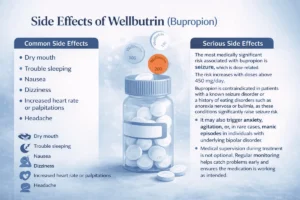
Possible Side Effects
Common Side Effects
- Dry mouth
- Trouble sleeping
- Nausea
- Dizziness
- Increased heart rate or palpitations
- Headache
Serious Side Effects
The most medically significant risk associated with bupropion is seizure, which is dose-related. The risk increases with doses above 450 mg/day. Bupropion is contraindicated in patients with a known seizure disorder or a history of eating disorders such as anorexia nervosa or bulimia, as these conditions significantly raise seizure risk.
It may also trigger anxiety, agitation, or, in rare cases, manic episodes in individuals with underlying bipolar disorder. Suicidal thoughts have been reported, particularly in younger adults, and the FDA requires a boxed warning regarding this risk for all antidepressants.
Medical supervision during treatment is not optional. Regular monitoring helps catch problems early and ensures the medication is working as intended.
Wellbutrin vs Stimulant ADHD Medications
Differences in Mechanism
Stimulant medications like amphetamine salts or methylphenidate produce rapid increases in dopamine and norepinephrine. Bupropion works more gradually by blocking the reuptake of these same chemicals without triggering the same spike.
Effectiveness Comparison
Stimulants generally have a larger and more consistent evidence base for ADHD. They tend to produce faster and more pronounced symptom relief. Bupropion shows real benefit, but its effect sizes are typically smaller than those seen with stimulants in head-to-head comparisons.
When Doctors Choose Alternatives
Wellbutrin may be recommended when stimulants are contraindicated, have caused intolerable side effects, or when a patient’s history raises concerns about misuse. It is also worth considering for patients managing ADHD alongside depression, anxiety, or nicotine dependence.
Proper Dosage and Usage
Wellbutrin comes in three formulations:
- Immediate release (IR): Typically taken two to three times daily
- Sustained release (SR): Usually taken twice daily, 8 hours apart
- Extended release (XL): Taken once daily in the morning
For ADHD, physicians typically start at 150 mg daily and adjust based on response. Extended-release tablets should never be crushed, split, or chewed, as this changes how the medication is released and increases seizure risk. Missing a dose should not lead to doubling up; simply continue with the next scheduled dose.
Who Should Avoid Wellbutrin
Wellbutrin is contraindicated in:
- Patients with a current or prior seizure disorder
- Anyone with a current or past diagnosis of anorexia nervosa or bulimia
- Patients taking MAOIs within the previous 14 days
- People who abruptly stop heavy alcohol use or certain sedatives
- Those already taking other bupropion-containing products
Screening for these risk factors before starting treatment is necessary, not a formality. It significantly reduces the chance of serious adverse outcomes.
Lifestyle Strategies That Support ADHD Treatment
Medication alone rarely addresses the full picture of ADHD. Several complementary strategies can meaningfully improve outcomes:
- Consistent sleep schedule: Poor sleep worsens inattention and emotional dysregulation
- Structured routines: Predictable daily structure reduces cognitive load and decision fatigue
- Cognitive Behavioural Therapy (CBT): CBT adapted for ADHD helps build practical skills for time management and organisation
- Regular exercise: Physical activity has been shown to improve executive function and attention
- Balanced diet: Stable blood sugar and adequate protein support sustained mental focus
Medication and lifestyle changes work best as partners. Relying solely on medication often leaves significant functional challenges unaddressed, particularly around organisation, relationships, and emotional regulation.

Frequently Asked Questions
Is Wellbutrin FDA-approved for ADHD?
No. Wellbutrin is FDA-approved for major depressive disorder and seasonal affective disorder. When prescribed for ADHD, it is used off-label. This is a legal and common practice when a physician determines it is clinically appropriate for a specific patient.
How long does Wellbutrin take to work for ADHD?
Based on clinical trials, some patients begin to notice improvements within two weeks of starting treatment. Full effects may take four to eight weeks to become apparent. This is slower than stimulant medications, which often produce noticeable changes within hours of the first dose.
Can Wellbutrin be used alongside other ADHD medications?
Combining bupropion with other medications requires careful medical oversight. It inhibits a liver enzyme called CYP2D6, which can raise blood levels of many other drugs, including certain antidepressants and antipsychotics. Patients should always inform their prescribing physician of all medications they are currently taking before adding or adjusting any medication.
Managing ADHD Means Finding What Works for You
Wellbutrin for ADHD is not a first-line treatment, but it fills an important gap for patients who need alternatives to stimulants. The clinical evidence, while more limited than that for amphetamines or methylphenidate, is real and encouraging, particularly for adults managing ADHD alongside depression or nicotine dependence.
Every patient’s situation is different. What is successful for one individual might not be appropriate or effective for another. Treatment decisions should always be made with a qualified healthcare provider who can evaluate your full medical history, weigh the benefits and risks, and monitor your response over time.
Effective ADHD management typically involves more than a prescription. Combining the right medication, if appropriate, with structured habits, therapy, and lifestyle adjustments gives you the strongest foundation for long-term improvement.