
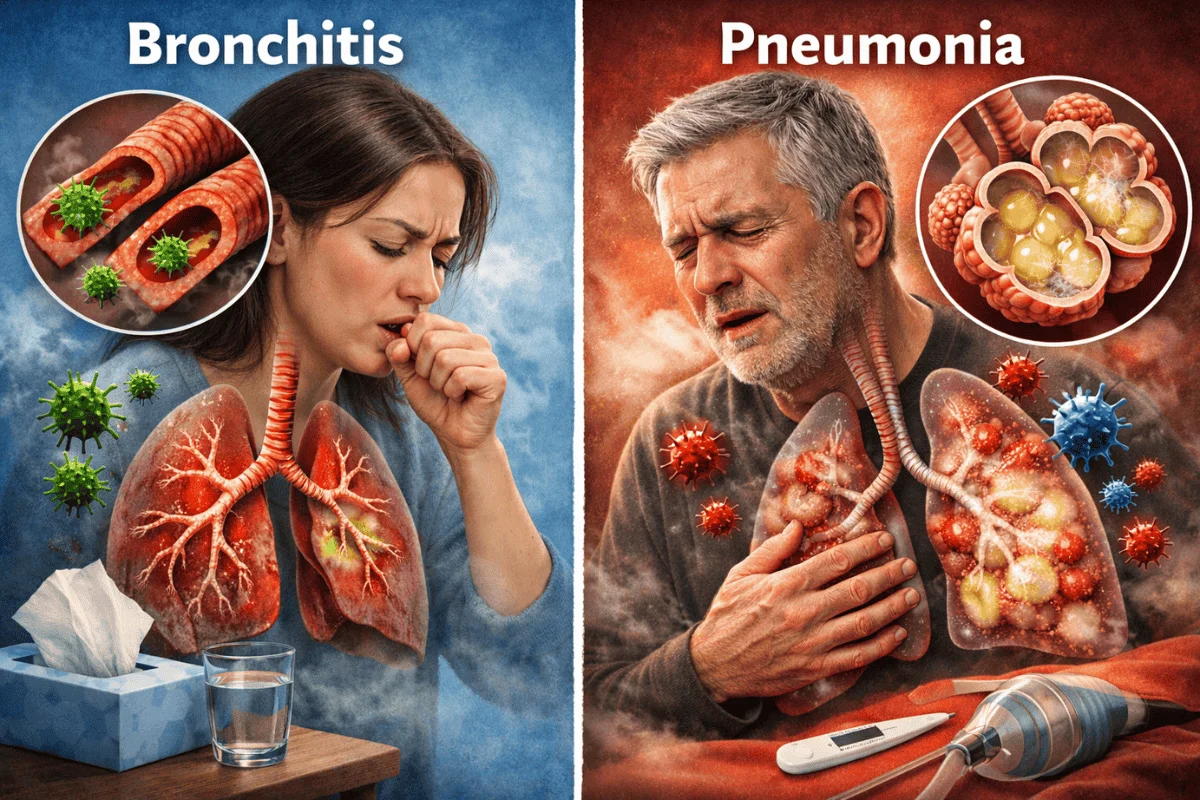

Respiratory infections are among the most common reasons people visit a doctor. While many conditions can affect the lungs, the distinction between bronchitis vs pneumonia is often confusing. Both affect your lungs, both cause a persistent cough, and both can leave you feeling exhausted for days. But they are not the same illness, and treating them as if they were can delay recovery.
Understanding bronchitis vs pneumonia helps you recognise what your body is fighting, when to rest at home, and when to call a doctor. This article covers the definitions, symptoms, causes, treatment options, and key differences between the two conditions so that you can make informed decisions about your health.
How the Lungs Work
Your lungs are built around two main structures: airways and air sacs. The airways, called bronchial tubes or bronchi, carry air from your windpipe down into the lungs. At the end of those tubes are millions of tiny air sacs called alveoli. Their job is to transfer oxygen from the air you breathe directly into your bloodstream.
When any part of this system becomes inflamed or infected, breathing becomes harder, and the body works overtime to fight off the invading pathogen.
Why Lung Infections Occur
Viruses or bacteria trigger most respiratory infections. Viruses spread through airborne droplets when an infected person coughs, sneezes, or talks. Bacteria can spread the same way or enter through contaminated surfaces. A weakened immune system, smoking, air pollution, and close contact with sick individuals all increase your chances of developing a lung infection.
What Is Bronchitis?
Inflammation of the bronchial tubes, the airways that carry air into and out of the lungs, is known as bronchitis. When these tubes become irritated and swollen, they produce excess mucus, which triggers coughing.
According to the CDC, a virus usually causes acute bronchitis. It is sometimes called a “chest cold” because it often follows a common cold or the flu.
Types of Bronchitis
Acute bronchitis comes on suddenly and typically clears up within one to three weeks. It is the most common form and usually does not require antibiotics.
Chronic bronchitis is a long-term condition defined as a productive cough lasting at least 3 months and recurring over 2 or more consecutive years. It is classified as a form of chronic obstructive pulmonary disease (COPD) and is most often linked to cigarette smoking. According to Mayo Clinic, this form requires ongoing medical management.
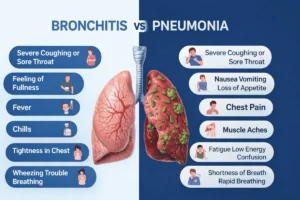
Common Symptoms of Bronchitis
- Persistent cough, with or without mucus
- Soreness in the chest
- Fatigue
- Mild headache and body aches
- Sore throat
- Slight fever and chills
- Wheezing or shortness of breath in some cases
The symptoms can feel similar to a bad cold. Most healthy adults recover from acute bronchitis without medication, though the cough can linger for several weeks.
What Is Pneumonia?
The air sacs in one or both lungs become inflamed due to pneumonia. These tiny sacs may fill with fluid or pus, making it significantly harder to breathe. Pneumonia attacks the lung tissue more deeply than bronchitis, which only affects the airways.
According to Mayo Clinic, pneumonia can range from mild to life-threatening. It is most serious for infants, adults over 65, and people with underlying health conditions or weakened immune systems.
Causes of Pneumonia
Bacterial pneumonia is the most common form in adults. The most frequent cause is Streptococcus pneumoniae. This type typically requires antibiotic treatment.
Viral pneumonia can result from influenza, COVID-19, RSV, and other respiratory viruses. It is the most common cause of pneumonia in young children.
Fungal pneumonia is less common and mainly affects people with weakened immune systems. It can result from inhaling fungal spores found in soil or bird droppings.
Common Symptoms of Pneumonia
- High fever, often 102°F (39°C) or higher
- Chills and sweating
- Chest pain when breathing or coughing
- Shortness of breath or rapid breathing
- Productive cough with thick or discolored mucus
- Severe fatigue
- Nausea, vomiting, or diarrhea
- Confusion, particularly in older adults
Pneumonia symptoms can develop rapidly over 24 to 48 hours or more gradually over several days, per NHS Inform. Left untreated, the condition can become dangerous.
Bronchitis vs Pneumonia: Key Differences
When comparing bronchitis vs pneumonia, the core distinction is where in the lungs the infection occurs and how severely it affects the body.
Expert Insight: “Bronchitis affects your bronchial tubes, while pneumonia affects the air sacs in your lungs,” explains pulmonologist Dr Leslie Tolle of the Cleveland Clinic. “Because pneumonia runs deep, it tends to come with more severe symptoms that affect your entire body.”
Location of Infection
Bronchitis targets the bronchial tubes. Pneumonia targets the alveoli. This difference in location is why pneumonia produces far more widespread symptoms, including breathing difficulty and high fever.
Severity of Symptoms
Bronchitis is generally milder. Most people feel unwell but can manage symptoms at home. Pneumonia is more intense. High fever, chest pain, and shortness of breath are common signs that the body is under significant stress.
Fever and Breathing Difficulty
A mild fever is typical with bronchitis. Pneumonia, by contrast, often causes a fever as high as 105°F (40°C), along with rapid breathing and notable difficulty breathing.
Diagnostic Tests
A doctor cannot reliably distinguish these two conditions based on symptoms alone. Diagnosis may include:
- Physical examination: A stethoscope is used to detect abnormal sounds in the lungs. Crackling or rattling sounds suggest pneumonia.
- Chest X-ray: This is the primary tool for confirming pneumonia and identifying the extent of infection.
- Blood tests: These help confirm infection and identify the organism responsible.
- Pulse oximetry: Measures blood oxygen levels, which pneumonia can significantly reduce.
- Sputum test: To determine the precise pathogen, a sample of mucus may be examined.
Expert Insight: Cleveland Clinic notes that if bronchitis symptoms worsen or you develop difficulty breathing, “these may be signs your bronchitis has progressed farther into your lungs” and developed into pneumonia.
Duration of Illness
Acute bronchitis typically resolves in 10 to 14 days, though a cough can persist for up to three weeks. Pneumonia recovery takes longer. According to NHS Inform, full recovery from pneumonia can take up to three months, even after other symptoms have cleared.
Causes and Risk Factors
Viral infections most commonly trigger both conditions, though bacteria play a bigger role in pneumonia. Environmental factors such as smoking and air pollution damage the airways and reduce the lungs’ natural defences.
High-risk groups for both conditions include:
- Adults aged 65 and older
- Children younger than 2 years
- Pregnant individuals
- Individuals with diabetes, heart disease, COPD, or asthma
- Those with weakened immune systems
Treatment Options
Treatment for Bronchitis
The CDC confirms that acute bronchitis usually gets better on its own without antibiotics. Most cases are viral, so antibiotics offer no benefit and can cause harmful side effects. Recommended home care includes:
- Getting plenty of rest
- Staying well hydrated
- Using a humidifier to ease breathing
- Taking over-the-counter pain or fever relievers as directed
- Using honey to soothe a cough (for adults and children over one year)
Treatment for Pneumonia
Pneumonia treatment depends on the type and severity of the infection. Bacterial pneumonia typically requires antibiotics. Viral forms may be treated with antivirals, and fungal pneumonia requires antifungal medication.
In more serious cases, treatment may include:
- Oxygen therapy to support blood oxygen levels
- Intravenous antibiotics and fluids in hospital
- Mechanical ventilation in severe cases
People with community-acquired pneumonia can often recover at home with medication, according to Mayo Clinic, but hospitalisation may be necessary depending on age, symptoms, and overall health.
When to Seek Medical Attention
Seek medical care promptly if you or someone in your care experiences any of the following:
- Fever of 100.4°F (38°C) or higher
- Shortness of breath or trouble breathing
- Chest pain when breathing or coughing
- Coughing up blood
- Confusion or unusual drowsiness
- Symptoms that last more than three weeks or keep worsening
Early diagnosis matters. Identifying whether you have bronchitis vs pneumonia allows a doctor to recommend the right treatment before the infection progresses or leads to complications.
Prevention Tips
Many respiratory infections, including both bronchitis and pneumonia, can be prevented with consistent habits:
- Vaccination: Annual flu shots reduce the risk of influenza-related bronchitis and pneumonia. Pneumococcal vaccines help protect against bacterial pneumonia, particularly for adults over 65 and young children.
- Hand hygiene: Regular handwashing with soap and water for at least 20 seconds reduces exposure to viruses and bacteria.
- Avoid smoking: Smoking damages the airways and makes you significantly more vulnerable to lung infections.
- Support your immune system: Regular sleep, physical activity, and a balanced diet all contribute to stronger respiratory defences.
- Cover coughs and sneezes: This reduces the spread of respiratory droplets to others.
The Bottom Line on Bronchitis vs Pneumonia
Both bronchitis and pneumonia are respiratory infections that affect the lungs. The biggest difference is where and how deeply the infection takes hold. Bronchitis inflames the bronchial tubes and tends to run a milder course. Pneumonia reaches the air sacs and can become serious quickly, especially in vulnerable individuals.
When comparing bronchitis vs pneumonia, pay attention to the severity of your fever, how hard you are finding it to breathe, and how long symptoms last. If something feels off or symptoms are not improving after a week, see a healthcare provider. Getting the correct diagnosis early is the most reliable path to a faster recovery.
Frequently Asked Questions
Can bronchitis turn into pneumonia?
Yes. If the original infection spreads from the bronchial tubes into the air sacs of the lungs, bronchitis can progress to pneumonia. Worsening symptoms, difficulty breathing, or increasing fever may signal this progression and should be evaluated by a doctor.
Do I need antibiotics for bronchitis vs pneumonia?
A virus usually causes acute bronchitis, so antibiotics are not recommended and will not help. Bacterial pneumonia, however, typically does require antibiotics. A doctor will determine the right treatment based on the cause and severity of your illness.
How can I tell the difference between bronchitis and pneumonia at home?
Symptoms alone are not always enough to distinguish the two. However, pneumonia usually causes a higher fever, more pronounced chest pain, and significant shortness of breath than bronchitis. A chest X-ray and physical examination by a healthcare provider are the most reliable ways to confirm which condition you have.