
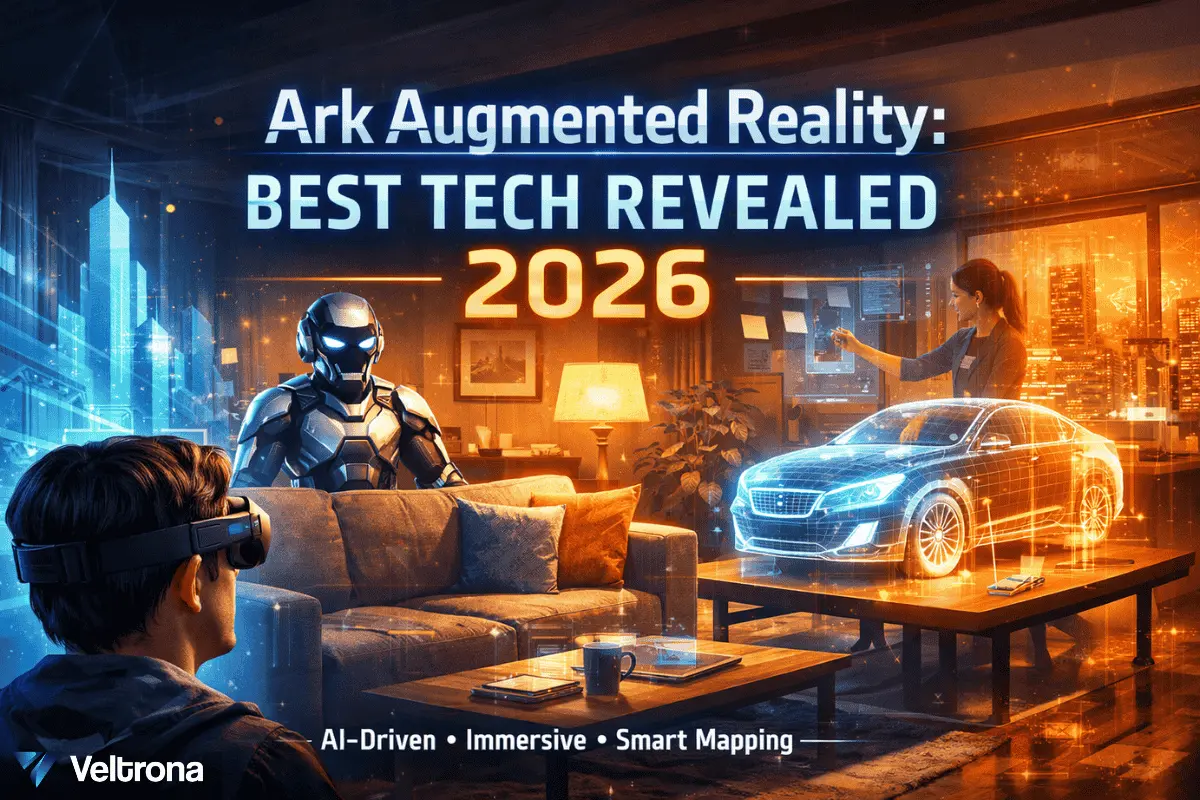

Technology continues to reshape how we interact with our surroundings, and 2026 is marking a major turning point. A new standard has arrived for bridging physical spaces and virtual content. Ark Augmented Reality is taking the spotlight as one of the most exciting developments in modern technology. It represents a massive leap forward in making digital objects feel completely natural in your living room or workspace.
People are paying close attention to this innovation because it fixes the most frustrating parts of older systems. Virtual objects no longer float aimlessly or clip through your furniture. Instead, they react to your physical space with an impressive level of awareness. This growing importance in modern technology means businesses and everyday users are finding new ways to integrate smart digital overlays into their daily routines.
What is Ark Augmented Reality
To appreciate this new technology, it helps to understand the basic concept of AR. At its core, augmented reality places digital images over your view of the real world. You might use a smartphone camera or wearable glasses to see these virtual additions. However, traditional systems often struggle to understand the meaning of the rooms they look at.
Ark Augmented Reality approaches this problem differently. It acts as a layer of memory and intelligence for your devices. Connecting digital and real-world environments through foundation AI models allows systems to understand what a desk, wall, or chair actually is. This means a virtual lamp will sit perfectly on a physical table, and a digital character will hide behind a real couch. The system remembers your space and applies logical rules to the behavior of virtual items.
Evolution and Growth
The early development of AR technology involved basic shape recognition and simple flat planes. Developers had to manually scan rooms and build specific rules for every new environment. This process took a lot of time and made early applications feel rigid and limited. Devices could only handle small amounts of visual data before they started to lag or lose tracking.
Over time, Ark Augmented Reality emerged from projects combining large language models and spatial computing. Researchers wanted a way for devices to instantly pull knowledge from the cloud to understand a room they had never seen before. The key advancements leading to 2026 included better depth sensors and massive improvements in AI reasoning. Devices can now process complicated scenarios instantaneously without requiring the user to complete a lengthy room scan.
Key Features of Ark Augmented Reality
Ark Augmented Reality enables seamless interaction between digital and physical spaces. With its advanced AI-driven spatial awareness, users can experience dynamic overlays, real-time object recognition, and contextual information displayed effortlessly in their environment.
Core Capabilities
The main features of this system revolve around its ability to infer knowledge. When the camera looks at a room, the software pulls relevant data to make a smart guess about the layout. It uses scene generation to automatically and logically edit and place 2D and 3D objects. Another core capability is occlusion, which stops virtual content from overlapping with real people who walk into the frame.
Advanced Innovations
What makes this system stand out is how it handles unseen environments without relying on old data. It uses interactive emergent abilities to adapt on the fly.
- Real-time environment mapping allows the system to read a room instantly.
- AI-driven interactions give virtual objects logical, physical behaviors.
- High accuracy tracking keeps items anchored firmly in place without drifting.
- Seamless cross-device integration lets users share the same view on different hardware.
- Immersive visual experience is achieved through advanced depth sensing and color matching.
Applications Across Industries
The practical uses for this technology extend far beyond simple entertainment. In the healthcare sector, medical trainees use these visual overlays to practice complex procedures on mannequins with precise guidance. Business teams rely on it for collaborative design sessions where everyone can view and modify a virtual product model from different angles.
Consumer applications are also expanding rapidly. Retailers use Ark Augmented Reality to let shoppers try out furniture in their homes before buying. On the gaming and entertainment front, players enjoy characters that actively hide behind real-world physical objects. This level of interaction turns simple mobile games into highly engaging physical activities.
Benefits of Ark Augmented Reality
One of the biggest advantages is improved efficiency for developers. Because the system already understands how basic room layouts work, creators spend less time coding rules for every single obstacle. This allows them to build richer applications much faster.
For the device user, better user engagement is a direct result of these improvements. When digital objects behave realistically, the brain accepts the illusion more easily. This creates enhanced digital experiences that feel valuable and helpful rather than gimmicky. Users can focus entirely on their task instead of fighting with clunky software controls.
Challenges and Limitations
Even with massive leaps forward, the technology still faces hurdles. The technical complexity of combining large AI models with spatial tracking requires immense processing power. Devices need strong battery life and cooling systems to handle the constant flow of data.
Cost barriers also remain a significant issue. High-end LiDAR sensors and specialized smart glasses are still expensive for the average consumer. Furthermore, privacy and data concerns are growing. Because the system relies on mapping private homes and physical spaces, companies must ensure strict data protection rules are in place to prevent personal layouts from being stored or shared without permission.
Future of Ark Augmented Reality
The future of Ark Augmented Reality promises greater accessibility and innovation. Advances in technology are expected to lower costs and improve device portability, making AR more accessible to everyday users. Additionally, enhanced privacy measures will foster trust and expand adoption across various industries.
Upcoming Innovations
The next few years offer even more interesting changes. Expected advancements include lighter wearable devices and faster cloud processing. As networks become faster, the heavy lifting of scene generation will move entirely off the device. This will allow everyday glasses to display complex holograms without needing bulky computer chips built into the frames.
Long-Term Impact
The industry transformation ahead will likely change how we interact with all digital media. Screens will no longer be confined to plastic rectangles on our desks.
- Integration with AI and IoT will let virtual assistants control smart home devices physically.
- Expansion into new sectors will bring immersive tools to construction and agriculture.
- Improved hardware performance will make daily wearable technology comfortable.
- Wider global adoption will lower prices and make these tools accessible to everyone.
- Personalized user experiences will tailor digital overlays to individual learning styles.
Why Ark Augmented Reality Stands Out
This technology offers a significant competitive advantage by treating rooms as living spaces rather than empty grids. Unique features compared to traditional AR include the ability to leverage prior knowledge to solve new visual problems. If it knows what a kitchen looks like, it can infer where the counters are, even with poor lighting. The market potential for this kind of intelligent spatial computing is enormous because it solves the exact problems that kept previous generations of the technology from going mainstream.
The Road Ahead for AR Technology
The spatial computing environment is evolving rapidly. By giving devices the ability to understand and remember the physical world, developers have unlocked a new level of immersion. We have seen how smart memory and scene generation remove the biggest frustrations of placing virtual objects in real spaces.
The future outlook points to a world where digital and physical realities blend seamlessly. As hardware gets lighter and artificial intelligence grows sharper, this technology will become a daily utility for millions. Ark Augmented Reality will continue to lead this charge by making our digital interactions more natural and intuitive than ever before. To stay ahead of the curve, businesses and tech enthusiasts should begin testing these intelligent spatial platforms today.