

Waking up with red, itchy, swollen eyes is alarming. Most people immediately guess the cause. They head to the pharmacy and buy random eye drops. But getting Pink Eye vs Allergies wrong can lead to serious consequences.
Using the wrong treatment might actually make a severe infection much worse. It can even put your long-term vision at risk. This guide explains how to tell the difference and why proper identification matters for your health.
What is Pink Eye (Conjunctivitis)?
Conjunctivitis happens when the clear tissue covering your eyeball gets inflamed. Blood vessels become visible, creating that famous pink or red look.
This disease comes in three primary forms. Viral conjunctivitis is the most common and acts like a cold in the eye. Bacterial conjunctivitis is a serious infection caused by harmful bacteria; irritants such as chemicals, smoke, or chlorine can cause irritant conjunctivitis from swimming pools.
Viral and bacterial types are highly contagious. They spread quickly through schools, offices, and homes. You can catch them just by touching a contaminated doorknob and then rubbing your face.
What are Eye Allergies (Allergic Conjunctivitis)?
Eye allergies happen when your immune system overreacts to something completely harmless. The medical term for this is allergic conjunctivitis.
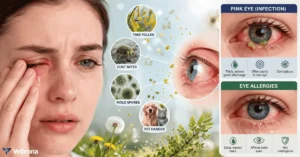
Common triggers include tree pollen, dust mites, mold spores, and pet dander. When these particles hit your eyes, your body releases a chemical called histamine. This chemical causes intense swelling, redness, and severe itching.
Unlike infections, eye allergies are absolutely not contagious. You cannot catch them from someone else. You also cannot give them to your family members.
Pink Eye vs Allergies: Key Differences
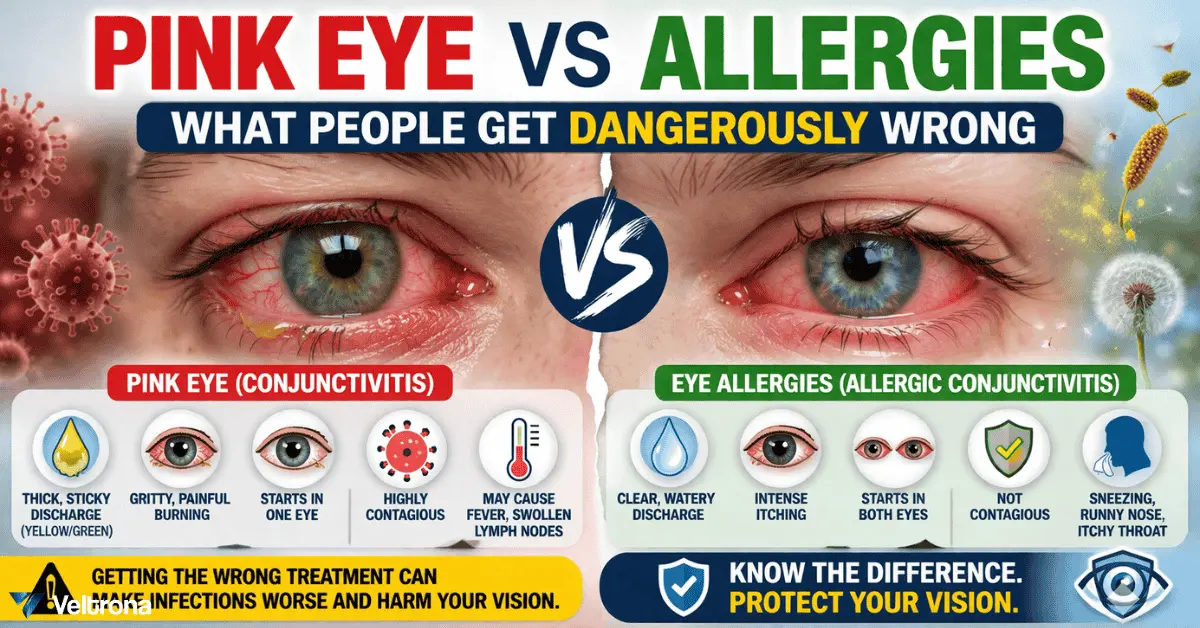
Understanding the differences between pink eye and allergies is crucial for finding the right relief. Even if they appear alike in the mirror, their behaviors are totally different.
Symptoms Comparison
Pink eye usually feels incredibly gritty. It feels like you have dirt or sand trapped under your eyelid. You might also experience a dull, aching pain. Allergic reactions feel completely different. They bring an intense, overwhelming urge to constantly scratch and rub your eyes.
One Eye vs Both Eyes
Infections typically start in just one eye. You might accidentally rub that infected eye and spread it to the other eye a few days later. Eye allergies almost always strike both eyes at the same time. The allergens in the air hit your face and trigger a reaction on both sides simultaneously.
Discharge Type
Bacterial pink eye produces a thick, yellow or green sticky discharge. This heavy goo often glues your eyelashes shut overnight. Eye allergies produce a completely clear, watery liquid. Your eyes will simply look glassy, and tears will constantly run down your face.
Contagious or Not
Infectious pink eye spreads easily through contact with contaminated surfaces, shared towels, or poor handwashing. Allergies affect only the person experiencing the immune response. You can safely share a living space with someone experiencing eye allergies.
Causes: Why Mixing Up Pink Eye vs Allergies Is Dangerous
Mixing up pink eye vs allergies is something most people ignore until their symptoms spiral out of control. A viral or bacterial infection requires a completely different medical approach than a simple immune system flare-up.
If you mistakenly use steroid-containing allergy drops for a viral eye infection, the virus can multiply rapidly. This specific mistake is dangerously wrong and can lead to severe corneal damage or permanent vision loss. Assuming you just have seasonal allergies also means you might accidentally infect your entire family with a contagious bacterium.
Quick Self-Check: When It Is Probably Allergies
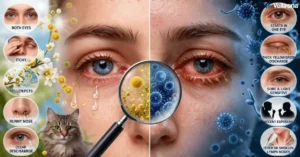
If you are unsure what is happening, look for systemic clues. Here are the top indicators that you are dealing with an allergic reaction rather than an infection:
- Both of your eyes became red and watery at the same time.
- You are experiencing an unbearable urge to rub or scratch your eyes constantly.
- Your symptoms appeared during heavy pollen season or after petting an animal.
- You also have a runny nose, sneezing fits, or a scratchy throat.
- The discharge coming from your eyes is entirely clear and watery.
Warning Signs: When It Is Likely Pink Eye
Infections come with specific warning signs. Watch closely for these symptoms that point directly toward conjunctivitis:
- The redness and swelling started in just one eye before spreading to the other.
- You wake up with your eyelids crusted shut by thick yellow or green goo.
- Your eyes feel extremely gritty, sore, or highly sensitive to bright indoor lights.
- You recently spent time around someone who had a cold or a known eye infection.
- You are experiencing a mild fever or swollen lymph nodes near your jaw and ears.
A Quick Comparison of Symptoms
To make things easier, use this simple table to compare Pink Eye vs Allergies at a glance.
| Symptom | Infectious Pink Eye | Eye Allergies |
| Discharge | Thick, sticky, yellow or green | Clear and watery |
| Feeling | Gritty, painful, burning | Intense itching |
| Location | Starts in one eye, may spread | Starts in both eyes |
| Contagious? | Highly contagious | Not contagious |
| Other Signs | Swollen lymph nodes, fever | Sneezing, runny nose |
Treatment Differences That Matter For Pink Eye vs Allergies
Treating Pink Eye vs Allergies correctly is the only way to find lasting relief. Bacterial pink eye often requires prescription antibiotic drops from a doctor. Viral pink eye simply needs time, rest, and strict hygiene to prevent it from spreading to others.
Allergies require over-the-counter antihistamine eye drops or oral allergy medications. Avoiding your specific allergy triggers is also an essential part of the treatment. Washing your face and using clean, cold compresses can soothe the painful irritation for both of these conditions.
Common Mistakes People Make With Pink Eye vs Allergies
Guessing your diagnosis often leads to prolonged suffering. Here are the dangerous mistakes people make when confusing Pink Eye vs Allergies:
- Using leftover antibiotic drops from a previous year on a viral infection.
- Continuing to wear contact lenses while experiencing active redness and irritation.
- Sharing towels, pillowcases, or eye makeup with family members while infected.
- Assuming a highly contagious bacterial infection is just seasonal pollen allergies.
- Putting steroid-based allergy drops into an eye with an active viral infection.
When to See a Doctor
Never take chances with your vision. If your symptoms do not improve after a few days of basic home care, schedule an appointment with a healthcare provider immediately.
You should seek urgent medical attention if you experience severe eye pain or notice sudden changes in your vision. Extreme light sensitivity or a feeling that a sharp object is permanently stuck in your eye also requires professional medical care.
Protecting Your Vision and Taking Action
Knowing the exact difference between Pink Eye vs Allergies can save you days of intense discomfort. It also protects the people around you from catching a highly contagious and painful infection.
Take time to carefully observe your specific symptoms before rushing to the local pharmacy. Look closely at the type of discharge, note whether one or both eyes are affected, and check for signs of a common cold. If you ever feel unsure about your symptoms, let a medical professional make the final call. Your eyes are far too important to risk on a simple guess.