

You’ve been eating reasonably well, staying fairly active, yet stubborn belly fat just won’t budge. Sound familiar? For many people, chronic stress may be a silent contributor to that frustrating abdominal weight gain. This is the idea behind what many health professionals and wellness writers now call cortisol belly, a term used to describe excess fat around the midsection that may be linked to prolonged stress and the hormones that come with it.
Understanding cortisol belly starts with understanding cortisol itself. Once you know how this hormone works, and how lifestyle factors can push it out of balance, the connection between chronic stress and belly fat becomes much clearer.
What Is Cortisol?
The adrenal glands, located directly above the kidneys, create the steroid hormone cortisol. Its production and release are governed by the hypothalamic-pituitary-adrenal (HPA) axis, a communication system between the brain and the adrenal glands.
According to StatPearls (NIH), cortisol influences metabolism, immune activity, cardiovascular tone, and the body’s stress response. It helps elevate blood glucose during demanding situations, supports immune regulation, and keeps blood pressure stable.
Crucially, cortisol follows a natural daily rhythm. Levels are highest in the morning to help you wake up and feel alert, and they taper off toward the evening. Dr Roberto Salvatori, an endocrinologist at Johns Hopkins University, puts it plainly: “Our cortisol level is regulated by the minute. It is very sensitive.”
During stressful events, the HPA axis activates quickly. The hypothalamus releases a signalling hormone that triggers the pituitary gland to release ACTH, which then prompts the adrenal glands to produce more cortisol. In small, short-term doses, this is completely normal and even beneficial.
What Is Cortisol Belly?
Cortisol belly refers to the accumulation of abdominal fat, particularly visceral fat, the kind that sits deep around internal organs, which may be associated with chronically elevated cortisol levels from ongoing stress.
Research published in peer-reviewed journals has noted that people with abdominal obesity often show elevated cortisol activity and that prolonged glucocorticoid exposure may contribute to increased visceral fat deposition. However, it is worth being clear: belly fat is rarely caused by one single factor. Diet, genetics, sleep quality, age, and activity levels all play a role. Cortisol is one piece of a larger puzzle.
How Stress May Contribute to Cortisol Belly
Chronically Elevated Cortisol
When stress becomes a daily, ongoing experience rather than a passing event, the HPA axis remains activated for too long. This sustained elevation of cortisol can disrupt normal hormonal balance and energy regulation, creating conditions that may favour fat storage, particularly around the abdomen.
Changes in Appetite and Food Cravings
Stress has a measurable effect on eating behaviour. A comprehensive review published in the journal Physiology and Behaviour (Tomiyama, 2014, PMC4214609) found that approximately 40% of people increase their caloric intake when stressed, while another 40% eat less, and 20% show no change. What is consistent across groups, however, is a shift in food preferences. Even people who do not eat more calories under stress tend to gravitate toward high-fat, high-sugar foods, such as fast food, snacks, and energy-dense comfort foods.
This happens partly because cortisol interacts with the brain’s reward system. Stress activates the mesolimbic dopamine pathways, increasing the appeal of hyperpalatable foods. In simple terms, your stressed brain craves a cheeseburger far more than a salad.
Fat Storage in the Abdomen
Glucocorticoids, such as cortisol, appear to influence where the body stores fat. Research suggests that prolonged stress-induced cortisol secretion can promote fat deposition specifically in the abdominal region. Visceral fat tissue is particularly sensitive to cortisol’s effects, and cumulative exposure over time may encourage its accumulation.
Reduced Physical Activity
Chronic stress and the fatigue that often accompanies it can significantly reduce motivation to exercise. This creates a compounding effect: less movement means fewer calories burned, which makes it even harder to offset the dietary changes that stress-related cravings tend to produce.
Signs That Stress May Be Affecting Your Body
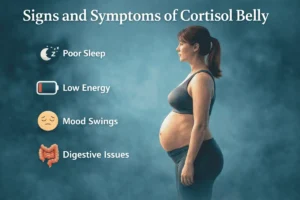
Not everyone who experiences stress will develop cortisol belly, but there are some signs that chronic stress may be taking a toll on your physical health:
- Persistent fatigue, even after a full night’s sleep
- Difficulty falling or staying asleep
- Increased cravings for sugary, salty, or fatty foods
- Noticeable weight gain around the abdomen
- Mood changes, irritability, or difficulty concentrating
These symptoms overlap with a wide range of health conditions, so it is always worth speaking with a healthcare provider rather than self-diagnosing based on a checklist.
Other Factors That Contribute to Belly Fat
While cortisol belly gets a lot of attention, it is only one possible contributor to abdominal weight gain. A realistic picture includes several other factors.
Poor Diet
High intake of processed foods, refined sugars, and excess calories is one of the most direct drivers of belly fat accumulation, regardless of stress levels.
Lack of Exercise
A sedentary lifestyle contributes significantly to fat storage. Regular movement helps regulate hormones, support metabolism, and burn excess energy.
Sleep Problems
Poor sleep is both a cause and a consequence of elevated cortisol. The earlier review notes that sleep deprivation can dysregulate the HPA axis and alter levels of ghrelin and leptin, the hormones that regulate hunger and satiety. This hormonal disruption can increase caloric intake and intensify food cravings.
Ageing and Hormonal Shifts
As people age, metabolism naturally slows, and hormonal changes, including shifts in estrogen, testosterone, and insulin sensitivity, can influence where fat is stored. Abdominal fat tends to become more common with age, particularly after midlife.
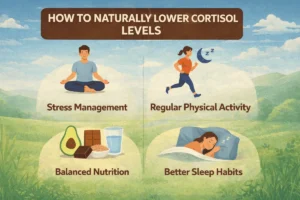
How to Reduce Cortisol Belly Naturally
The good news is that most of the strategies that help manage cortisol belly are the same habits that support overall health.
Stress Management
Techniques like deep breathing, progressive muscle relaxation, meditation, and mindfulness-based practices can help calm the HPA axis and reduce cortisol output over time. Even brief, consistent relaxation practices have been shown to support hormonal balance.
Regular Physical Activity
Exercise is one of the most effective ways to regulate cortisol and support a healthy body composition. Aerobic activities like walking, cycling, and swimming help burn visceral fat, while strength training supports metabolic health and muscle mass.
Balanced Nutrition
A diet built around whole foods, lean protein, healthy fats, fibre-rich vegetables, and complex carbohydrates supports stable blood sugar. It helps reduce the hormonal fluctuations that drive stress-related cravings. Cutting back on ultra-processed foods and added sugars is particularly helpful.
Better Sleep Habits
Prioritising consistent, quality sleep is one of the most underrated tools for managing cortisol and body weight. Aiming for 7 to 9 hours of sleep per night, maintaining a regular sleep schedule, and reducing screen exposure before bed can all contribute meaningfully.
Lifestyle Habits That Support Healthy Cortisol Levels
Beyond the big four above, several everyday habits can help keep cortisol in a healthy range:
- Spending time outdoors, particularly in natural settings
- Maintaining a predictable daily routine to reduce background uncertainty
- Reducing caffeine consumption, particularly in the afternoon and evening
- Staying socially connected, since meaningful relationships buffer the physiological effects of stress
- Reducing alcohol consumption, which can disrupt cortisol regulation and sleep quality
When to Seek Professional Advice
Most people reading about cortisol belly do not have a clinical hormonal disorder. However, if you are experiencing persistent, unexplained weight gain, extreme fatigue, or symptoms that suggest something more significant may be going on, it is worth speaking to your doctor.
Clinical conditions like Cushing’s syndrome, where cortisol levels are chronically and pathologically elevated due to tumours in the pituitary or adrenal glands, cause genuine hormonal disruption and require proper medical diagnosis and treatment. Symptoms include weight gain around the face and abdomen, high blood pressure, brittle bones, and irregular hair growth.
As endocrinologists have cautioned in recent reports, a one-off cortisol blood test is rarely useful for most people, and over-the-counter supplements claiming to “lower cortisol” have not been shown to be effective in clinical trials. If you suspect a hormonal issue, seek a qualified medical opinion rather than self-treating.
Stress Is Real, and So Are Its Effects
Cortisol belly is not a myth, but it is also not the whole story. The evidence supports a meaningful connection between chronic stress, elevated cortisol, and changes in appetite, food preferences, and abdominal fat storage. What the evidence does not support is the idea that cortisol alone is responsible for belly fat, or that targeting one hormone in isolation will solve the problem.
The more productive framing is this: chronic stress is a genuine threat to physical health, and managing it well pays dividends across every system in the body. Focus on sleep, movement, nourishing food, and sustainable stress management, and the cortisol belly concern largely takes care of itself.
If something still feels off after making meaningful lifestyle changes, your doctor is the right place to start.