
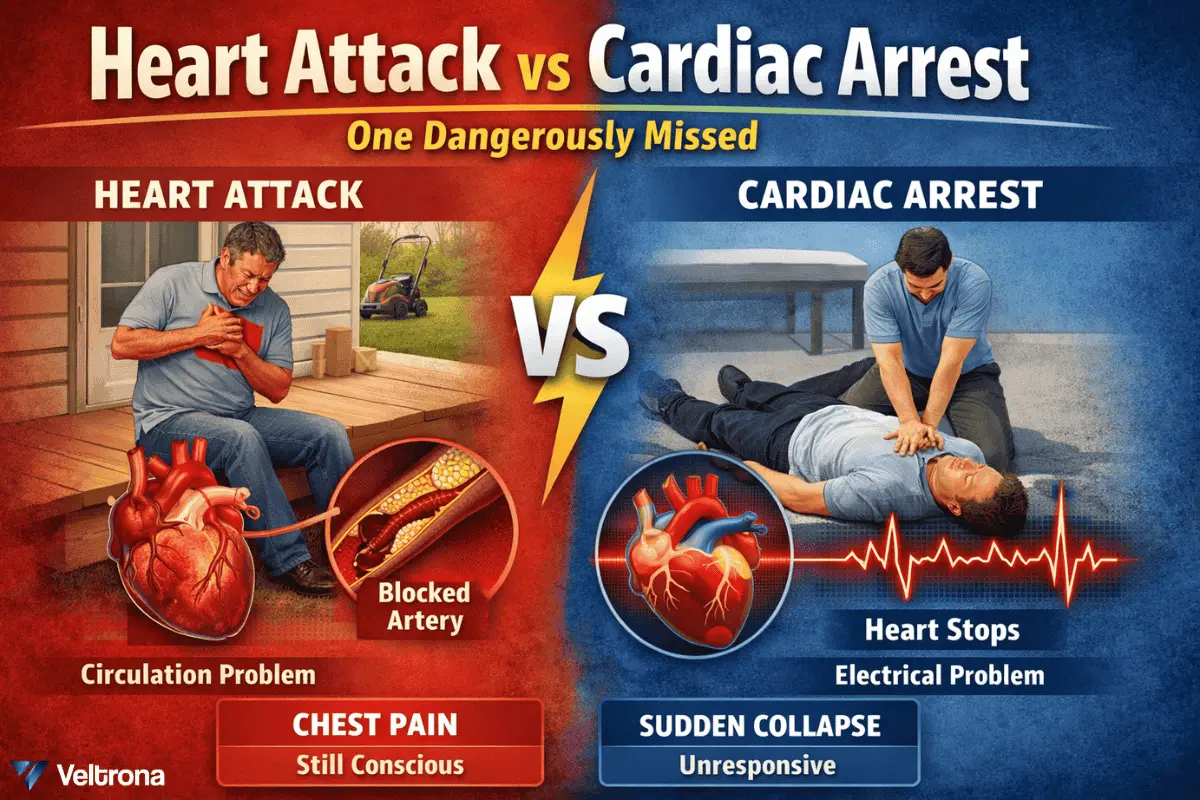

A man is mowing the lawn on a Saturday afternoon when he suddenly feels a crushing pain in his chest. He sits down on the porch and assumes it is just severe indigestion. He decides to wait it out. An hour later, he suddenly collapses on the floor without a pulse.
The chest pain he felt earlier was a heart attack. The sudden collapse was a cardiac arrest.
People often use these two medical terms interchangeably, but they are completely different emergencies. A circulatory issue is a heart attack. Cardiac arrest is an electrical problem. Confusing the two is a dangerous mistake because the necessary emergency responses differ completely.
Knowing the exact details of a heart attack vs cardiac arrest can truly save a life. When you understand what is happening inside the body, you can recognize the warning signs early and take the right action before it is too late.
What is a Heart Attack?
A heart attack happens when blood flow to a part of the heart is blocked. You can think of it as a plumbing problem.
Your heart is a muscle that needs oxygen-rich blood to survive. The heart receives this blood from the coronary arteries. Sometimes, cholesterol and fat build up in these arteries, forming plaques. If a plaque breaks open, a blood clot forms around it. This clot can completely block the artery, preventing blood from reaching the heart muscle.
When the heart muscle gets cut off from its blood supply, it begins to die. The longer the blockage goes untreated, the more damage the heart suffers. Nevertheless, the heart continues to beat throughout a heart attack. The person is usually awake, breathing, and able to talk.
What is Cardiac Arrest?
An abrupt electrical breakdown in the heart is known as cardiac arrest. While a heart attack is a plumbing issue, cardiac arrest is an electrical system failure.
Your heart has an internal electrical system that controls the rhythm of your heartbeat. When this system malfunctions, the heart beats dangerously fast or starts quivering. This irregular rhythm means the heart can no longer pump blood to the brain, lungs, and other organs.
Because the brain is suddenly deprived of oxygen, the person loses consciousness within seconds. The heart is no longer beating effectively. Without immediate medical treatment, cardiac arrest is fatal in just a matter of minutes.
Heart Attack vs Cardiac Arrest: Key Differences
Understanding a heart attack vs cardiac arrest requires looking at how the body reacts to each event.
The most significant difference is the heartbeat. During a heart attack, the heart continues to beat even though blood flow is blocked. During cardiac arrest, the heart stops beating completely.
Urgency is another major difference. A heart attack is a serious medical emergency that requires a hospital visit immediately, but the patient often has hours of warning signs. Cardiac arrest strikes without warning. The person will drop to the ground and need life-saving intervention right then and there. Every single minute that passes without CPR lowers the chance of survival by ten percent.
Symptoms of a Heart Attack
A heart attack often gives a warning. The symptoms can start slowly and persist for hours, days, or even weeks before the actual event. Not everyone experiences the classic Hollywood image of someone clutching their chest.
If you or someone else experiences the following warning signs, seek medical help immediately:
- Uncomfortable pressure or a squeezing pain in the center of the chest
- Shortness of breath that happens with or without chest discomfort
- Pain or discomfort spreading to the left arm, jaw, neck, or back
- A feeling of nausea, indigestion, or breaking out in a cold sweat
Women often experience different symptoms than men. Instead of severe chest pressure, they are more likely to have nausea, back or jaw pain, and dyspnea.
Symptoms of Cardiac Arrest
Unlike a heart attack, cardiac arrest happens rapidly and without warning. The electrical failure in the heart causes an immediate shutdown of the body.
You can identify cardiac arrest by looking for these sudden signs:
- Sudden collapse and loss of consciousness
- No pulse or detectable heartbeat
- No breathing or only abnormal gasping sounds
- Total unresponsiveness to loud noises or physical touch
Because the brain loses oxygen instantly, the person will not be able to ask for help. This is why immediate bystander intervention is critical for survival.
Can a Heart Attack Lead to Cardiac Arrest?
Yes, a heart attack can absolutely trigger cardiac arrest. This is why treating a heart attack early is so incredibly important.
When a heart attack damages the heart muscle, it changes how electrical signals travel through the tissue. This damage can cause the electrical system to short-circuit. When that happens, the heart stops pumping, and cardiac arrest begins.
Most heart attacks do not lead to cardiac arrest. However, when sudden cardiac arrest occurs, a heart attack is one of the most common causes. Other causes include thickened heart muscle, heart failure, and severe physical trauma.
What to Do in an Emergency
When you are facing a heart attack vs cardiac arrest, your response dictates the outcome. You need to know exactly how to react to both situations.
For a Heart Attack
Contact emergency authorities right away if you think someone is experiencing a heart attack. The person should not be allowed to drive themselves to the hospital. Have them sit down, rest, and try to stay calm.
If they are not allergic, you can give them an aspirin to chew while waiting for the ambulance. Aspirin helps thin the blood and can reduce the size of the blood clot blocking the artery. Stay with them and monitor their breathing until help arrives.
For Cardiac Arrest
Cardiac arrest requires action within seconds. Call emergency services right away. Tell the dispatcher the person is unresponsive and not breathing.
Begin cardiopulmonary resuscitation immediately. In the middle of the chest, push quickly and forcefully. Aim for between 100 and 120 compressions each minute. If there is an automated external defibrillator nearby, send someone to grab it. Activate it and pay attention to the voice instructions. The machine will tell you exactly what to do and will deliver a shock if the heart needs it. Do not stop chest compressions until medical professionals arrive and take over.
Prevention Tips
You can significantly lower your risk for both of these dangerous heart conditions by making smart daily choices. Building strong habits now protects your heart for the future.
Follow these practical tips to maintain a healthy cardiovascular system:
- Eat a balanced diet full of vegetables, lean proteins, and whole grains
- Exercise regularly by aiming for at least thirty minutes of daily physical activity
- Manage your blood pressure and cholesterol levels with the help of your doctor
- Avoid smoking completely and limit your alcohol intake
- Schedule routine health checkups to catch potential heart issues early
Why Awareness Matters
The concepts behind a heart attack vs cardiac arrest are easy to grasp once they are explained clearly. A heart attack is a blocked artery. Cardiac arrest is a broken electrical circuit.
Recognizing the difference empowers you to act decisively in an emergency. A heart attack gives you time to call an ambulance and get the person to a hospital. Cardiac arrest demands that you become the immediate lifesaver by starting chest compressions.
Take the time to find a local CPR class. Learning how to perform chest compressions and operate an automated external defibrillator takes only a few hours. That small investment of time gives you the power to restart a heart and keep a family together.